Meeting Industrial Needs: Wuqiang Delegation Exchanges Technologies with Food College
Date:2026-06-22 | Source: | Author: | Page view:
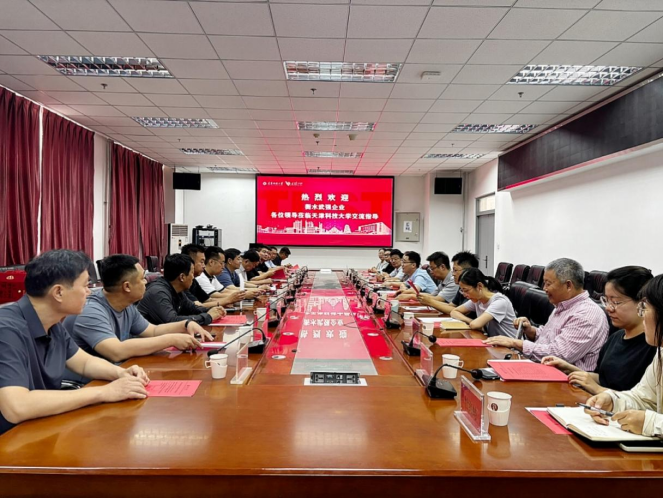
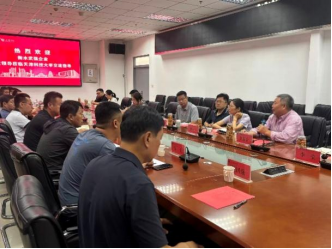
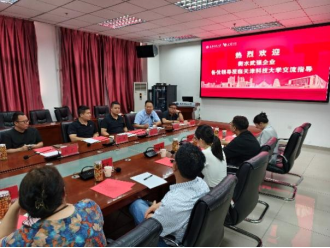
In order to further promote the strategic deployment of scientific and technological innovation integration between the school and the local area, deepen the collaborative innovation among industry, academia and research, and assist in the transformation and upgrading of local traditional industries, on June 18th, Chairman Zheng Jiebin of the Xingqiu County Committee of the Chinese People's Political Consultative Conference, Vice Chairman Liu Hongnian, along with representatives from the county's food industry association and several key food enterprises, a total of 12 people, visited the Food Science and Engineering College of Tianjin University of Science and Technology to conduct a special technical exchange and discussion. The Party Secretary and President of the Food College, Cheng Dai, along with over 10 expert and key teaching staff attended the meeting. Both sides focused on the core technical problems in food processing, precisely identified industrial demands, and jointly discussed new paths for scientific and technological innovation cooperation.
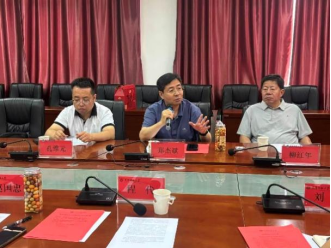
At the exchange meeting, Director Cheng Dai warmly welcomed the visit of the government and enterprise delegation from Wugang County. He provided a detailed introduction to the college's discipline construction, faculty team, research platforms and key research directions. He stated that the college has always adhered to the core function of providing scientific and technological services for local development, implemented the "Striving Project", deeply cultivated the integration of education, research and industry at the campus, focused on key areas such as food preservation, green processing, and quality control to tackle core industrial technologies, actively promoted the industrialization of scientific research achievements, and hoped that through this precise connection, the college's scientific research and talent advantages could be fully utilized to precisely empower the transformation and upgrading of the Wugang food industry, and create a cooperative model of school-town collaboration and mutual benefit. Chairman Zheng Jibin of the Wugang County People's Political Consultative Conference delivered a speech introducing the current development status of the county's industries. He stated that food processing is a characteristic and pillar industry of Wugang County, and many small and micro food enterprises in the local area are currently in a critical period of transformation from scale expansion to quality improvement, from traditional production to scientific and technological empowerment. They generally have technical shortcomings such as backward processes, insufficient preservation technology, and weak quality control. He hopes that through this exchange, a regular platform for college-enterprise scientific and technological cooperation can be established, the barriers between industry, research and education can be broken through, and the intellectual resources of universities can be utilized to solve the development bottlenecks of enterprises, and fully activate the innovation vitality of the county's food industry.
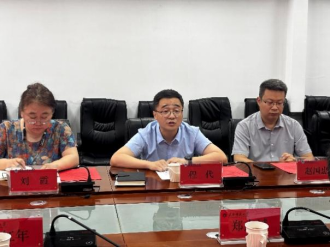
The technical exchange session focused on the industry's pain points and was practical and efficient. The representatives from various enterprises, based on the actual situation at the production front, mainly discussed common industry problems such as oil oxidation and excessive peroxide value in nut products like fish skin and peanuts. They expressed that the shortcomings of traditional frying techniques, storage and transportation-induced oxidation, and insufficient product quality stability have hindered the improvement of market performance and efficiency for the enterprises. Regarding the various technical problems faced by the enterprises, the expert team from the Food Science Institute of Tianjin University of Science and Technology provided precise answers and proposed cost-effective comprehensive solutions. They started by controlling water content of raw materials, adding natural antioxidants, and optimizing the process to solve the oxidation problem of peanuts. At the same time, they optimized the packaging and storage methods to reduce spoilage and loss. They also offered suggestions on the utilization of peanut by-products and the development of new foods, helping the enterprises extend their industrial chains and achieve diversified and high-value product upgrades.
Chairman Zheng Jibin delivered the concluding speech. He highly recognized the scientific and technological strength of Tianjin University of Science and Technology and its practical technical guidance. He emphasized that this exchange precisely addressed the technical blind spots that enterprises have long faced, and pointed out the direction for the innovative development of the county's food industry. He stated that Wugang County will actively deepen the collaboration between the university and the county, promote enterprises to connect with university research resources, convert the exchange intentions into implemented projects, and regularly carry out technological research and transformation cooperation.
The successful holding of this exchange seminar not only precisely matched the technical needs of food enterprises in Wugang County, but also provided a high-quality platform for the transfer and transformation of Tianjin University of Science and Technology's scientific and technological achievements. It is a vivid practice of the Food College's comprehensive implementation of the "3510" strategic project, the deepening of the "Pioneer Plan", and the acceleration of the "Striving Project". In the future, the university and the county will establish a regular cooperation mechanism in areas such as raw material quality control, the application of green additives, and new product development, and jointly promote the high-quality and healthy development of the regional food industry.