Industry-education integration: TUST Food College partners with Chuanhai Chenyang
Date:2026-04-28 | Source: | Author: | Page view:
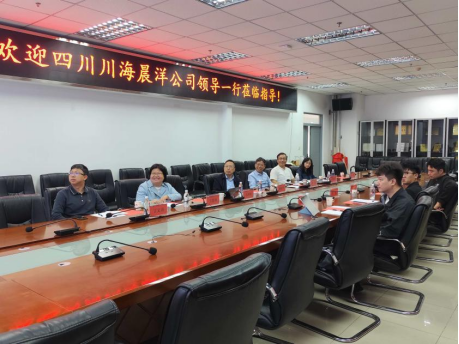
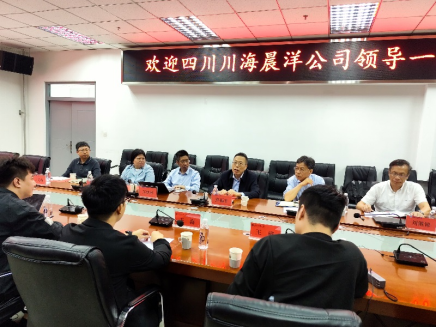
On April 24th, a delegation from Sichuan Chuanhai Chenyang Food Co., Ltd. visited Tianjin University of Science and Technology to hold a cooperation exchange meeting between the university and the enterprise. Vice President and President of Tianjin University of Science and Technology, Lu Fuping, attended the meeting. Representatives of the School of Food Science and Engineering and the School of Biotechnology and Engineering also participated. The two sides had in-depth discussions on issues such as talent cultivation, scientific research efforts, technology transfer, and the construction of internship bases, and jointly discussed the integration of industry and education, as well as the coordinated development of both parties.
During the meeting, President Lu Fuping warmly welcomed the visit of the enterprise delegation and introduced the school's educational characteristics and the advantages of the food science discipline. He pointed out that food science and engineering is a core strength discipline of the school, with profound educational background and outstanding research capabilities. The school has long focused on areas such as food processing, food safety, and the research and development of new ingredients, relying on high-level research platforms, and has accumulated rich research achievements, continuously providing talent support and technical guarantees for the development of the food industry. The school has always adhered to the concept of integrating industry and education, attaching great importance to collaborative innovation between the university and enterprises, and hopes that both parties can take this exchange as an opportunity to leverage their respective resource advantages, deepen practical cooperation in multiple fields, achieve complementary advantages and mutual benefit, and contribute to the high-quality development of the enterprise through university-enterprise cooperation.
The School of Food Science and Engineering and the School of Biotechnology and Engineering respectively detailed the construction of the discipline, talent cultivation, faculty strength, and cooperation in industry-academia-research. The schools closely followed the demands of industrial development, optimized the talent cultivation model, strengthened practical teaching, and focused on cultivating high-quality professionals. At the same time, they based on the actual technical needs of enterprises, carried out applied research to support the transformation and upgrading of the industry and enterprises.
The person in charge of Chuanhai Chenyang Company introduced the enterprise's business layout, research and development direction, and future development plans. He stated that the company has been deeply engaged in the research and production of food ingredients and compound seasonings, has a solid market foundation, and has urgent innovation needs. The company highly recognizes the comprehensive educational strength and industry influence of Tianjin University of Science and Technology and hopes to rely on the university's research and talent advantages to solve production technology problems, jointly build talent cultivation channels, attract high-quality graduates, and empower the high-quality development of the enterprise through university-enterprise cooperation.
During the discussion session, both parties deeply discussed issues such as industry development trends, joint technology research and development, student internships and employment, and long-term cooperation mechanisms, reached preliminary cooperation consensus, and laid the foundation for the subsequent project implementation.
This visit and exchange effectively narrowed the distance between the university and the enterprise and opened up communication channels. In the future, the two schools will continue to deepen university-enterprise cooperation, precisely align with industrial demands, continuously improve the quality of talent cultivation and social service capabilities, and promote the deep integration of the education chain, talent chain, and industry chain, using collaborative innovation in industry-academia-research to contribute to the high-quality development of the food industry.