Targeting Endeavor Program: Food College Holds Research Task Meeting for High-quality Discipline Development
Date:2026-06-04 | Source: | Author: | Page view:
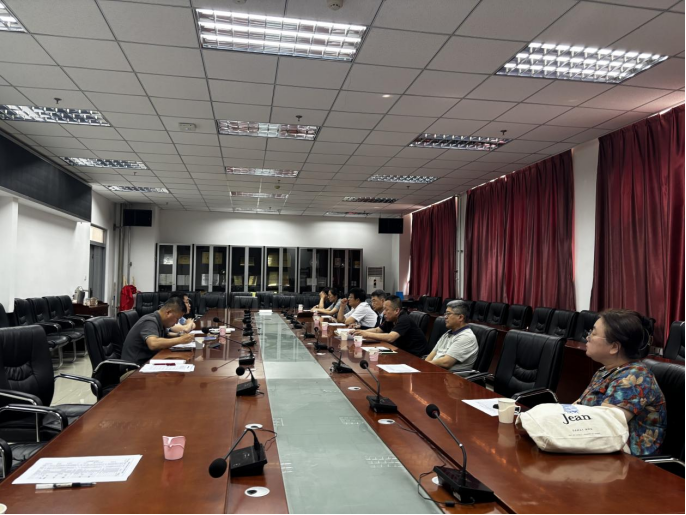
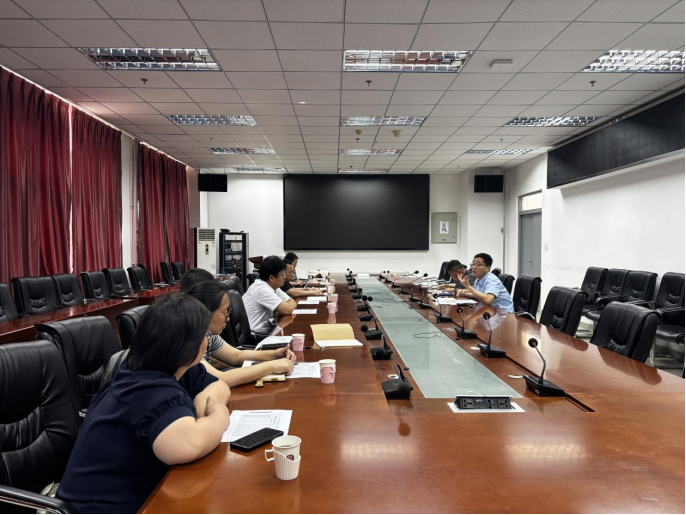
In order to implement the requirements of the school's "Pioneer Plan" and the "3510" strategic project, closely follow the national strategic deployment of "Healthy China" and the "Big Food Concept", and solidly implement the scientific research-oriented action plan of the college's "Striving Project", solve the annual research funding breakthrough problems, and strive to achieve the phased goals of building a first-class discipline, the Food Science and Engineering College recently organized a special promotion meeting for scientific research orientation. Party Secretary Du Xinhjun, Party Deputy Secretary and President Cheng Dai, and Vice President Liu Jifeng attended the meeting, and all the heads of the research teams in the college participated in this meeting.
This meeting closely focused on the top-level planning of the "Striving Project", centered around the core tasks of refining the discipline direction, optimizing the research team, and generating landmark scientific research achievements. It also combined with the overall planning of the college's "15th Five-Year" discipline construction to conduct a comprehensive review of the progress of this year's scientific research work. By benchmarking the research construction achievements of internal engineering and science-related colleges and drawing on the industrialization research construction experience of benchmarking universities in the food discipline, the meeting concluded that the current stage of the college's scientific research funding breakthrough has entered the decisive critical phase. By comparing the construction indicators of the "Striving Project" with the set target of the college's scientific research funds in 2026, the college proposed to improve the supporting guarantee measures, coordinate the allocation of research platforms, teaching staff, and special policies, and provide comprehensive service and support to help each research team deepen the cooperation with enterprises and accelerate the implementation of ongoing projects.
During the meeting, Liu Jifeng reported in detail on the details of the funds and the completion of annual indicators of each research team, and sorted out the bottlenecks and difficulties in the research work. Currently, the scientific research construction of the college shows an uneven situation in team development, and the progress of the funds for each research group is quite different. Analyzing the reasons, on the one hand, some researchers' enthusiasm for delving into the industrial front is insufficient, and their research topics mostly focus on basic theoretical research, making it difficult for the research projects to meet the actual pain points of the industry; on the other hand, affected by the inherent attributes of the industry, combined with the reduction of R&D investment by downstream enterprises, the reduction of the number of national-level longitudinal project nominations, and the increasingly fierce competition in major scientific research project applications, the expansion of both horizontal and vertical scientific research funds has encountered practical obstacles. The meeting directly addressed the historical legacy problems such as fragmented scientific research layout and low degree of industry integration, and pointed out the direction for subsequent precise rectification.
Cheng Dai stated that the college will take "organized scientific research + deep integration of industry-university-research" as the main line, and determine four breakthrough measures. First, implement the first responsibility of the research team leaders, each leader should itemize the ongoing projects and cooperation negotiation ledgers, identify their own shortcomings, actively go to the industrial chain to connect with enterprises to meet their actual needs, and promote the signing and implementation of the intended cooperation projects as soon as possible; second, deeply explore the integrated education resources of master's, doctoral, and postdoctoral programs, relying on the special policies for master's and doctoral programs, implement project-based school-enterprise joint training, explore linking the enrollment quotas of graduate students with the completion of scientific research funds, jointly appoint industry mentors by the cooperation enterprises, and rely on the talent bond to deepen the binding between the college and enterprises; third, break the resource barriers between research groups, promote cross-team resource sharing, project collaborative circulation, integrate the scientific research strength of the entire industrial chain to form a joint research group, accelerate the establishment of the Beijing-Tianjin-Hebei Food Industry Technology Innovation Alliance, and implement the two-way collaboration model of "enterprise setting the question, scientific research team tackling it"; fourth, implement the scientific research challenge and appointment mechanism, release key "knockout" technical challenges in the industry, provide resource to young teachers for the expansion of horizontal projects, revitalize the qualifications of all scientific research platforms in the college, and further enhance the college's bargaining power in external cooperation.
Cheng Dai stated that targeted research efforts are the key leverage for implementing the "Striver Project", optimizing the academic environment, and building first-class disciplines. Currently, the window period for the research breakthrough is limited and the tasks are arduous. The effectiveness of the breakthrough efforts directly affects the medium and long-term discipline assessment and the introduction of high-level talents of the college. All the researchers in the college should focus on the overall development of the college, enhance their ideological understanding, uphold the spirit of hard work and practical action to seize the window period for project implementation, and closely monitor the two core tasks of recovering research funds and transforming research achievements.
This research-oriented special meeting is a vivid practice of the Food Science College in fully implementing the "3510" strategic project, further promoting the "Pioneer Plan", and accelerating the "Striver Project". In the future, the college will regularly implement the closed-loop management system of "monthly work scheduling, quarterly progress briefings, and annual comprehensive assessment", track the implementation effectiveness of each breakthrough task in real time, make up for the shortcomings in scientific research development item by item, ensure the quality and quantity of completing the annual research tasks, and steadily promote the college's discipline construction to achieve high-quality development in accordance with the "15th Five-Year Plan".